Quick contacts
-
Indian pavilion shop no 113 Global village, Dubai
-
Monday: 13:00-18:00


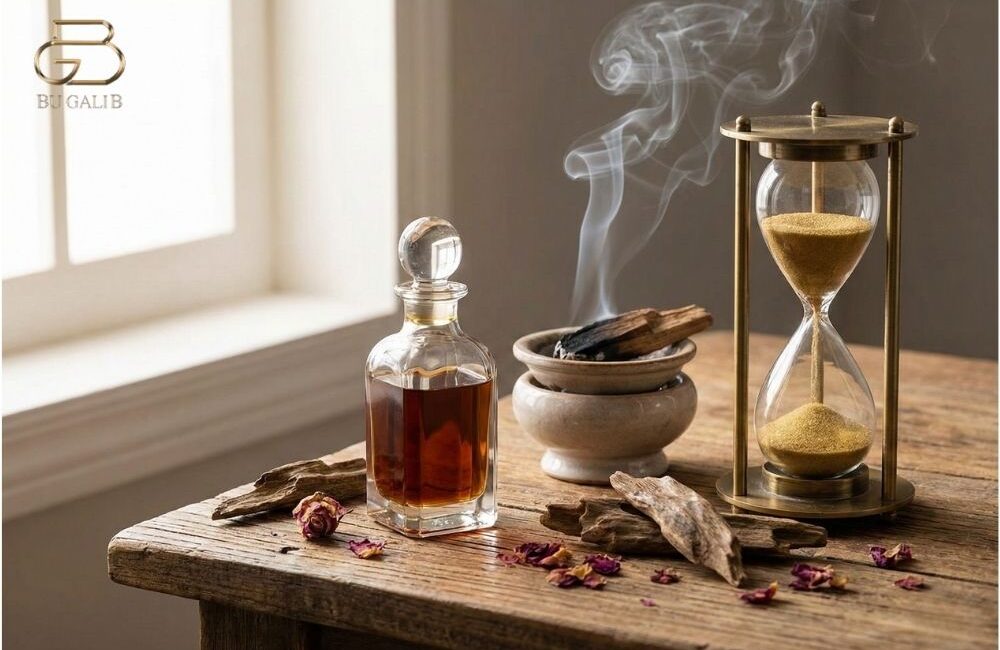
People choose oud perfume for depth and presence. Many buyers ask one question first. How long does it last. This question matters more today. Oud prices are high. Oud sourcing is regulated. Buyers want value and safety. Longevity affects confidence and comfort. This topic will matter even more in coming years as natural resources face pressure.
Oud perfume comes from agarwood resin. Agarwood forms in Aquilaria trees. This process happens after natural infection. This fact is documented in forestry research. Agarwood trade is regulated internationally. Oversight is provided by CITES. This regulation confirms rarity. Rarity affects cost and usage.
Oud contains heavy aromatic molecules. These molecules evaporate slowly. This property is explained in fragrance chemistry literature. Slow evaporation increases lasting time. Light citrus oils evaporate faster. Oud does not behave like those materials. This explains its reputation.
There is no fixed duration. Longevity depends on composition. Verified regulatory sources do not publish exact hour ranges. Based on available verified sources, this information cannot be fully confirmed. Industry standards classify oud as a base note. Base notes last longer than top notes. This classification is consistent across perfumery education.
Oud oil is oil based. Spray perfumes contain alcohol. Alcohol evaporates faster. Oils stay longer on skin. This principle is supported by cosmetic formulation standards. Oud oil often lasts longer. Exact time still varies. Verified sources do not provide numeric guarantees.
Perfumes have defined concentration categories. These categories include perfume oil and eau de parfum. Definitions are standardized in cosmetic regulation documents. Higher concentration means more aromatic compounds. More compounds increase staying power. Oud is often used in higher concentrations. This increases longevity.
Skin chemistry affects perfume behavior. This is recognized in dermatology research. Dry skin absorbs fragrance faster. Oily skin retains fragrance longer. No official authority publishes prediction models. Results differ by person. Testing remains essential.
Heat increases evaporation rate. Cold slows evaporation. This is a physical property of volatile compounds. Fragrance science confirms this behavior. Oud lasts longer in cooler conditions. Humid climates can change projection. Exact outcomes vary.
Application location affects longevity. Pulse points produce heat. Heat increases diffusion. This effect is documented in fragrance training materials. Clothing application extends scent life. Staining risk exists. Textile safety guidance should be followed.
Natural oud comes from resin. Synthetic oud is lab created. This distinction is acknowledged by IFRA. Synthetic oud allows stability. Natural oud changes over time. Longevity differs by formulation. Brands are not required to disclose ratios. Based on available verified sources, full composition transparency cannot always be confirmed.
Oud perfumes can age. Aging occurs through oxidation. This process is recognized in cosmetic stability studies. Proper storage slows change. Heat accelerates degradation. Longevity perception can increase over time. Official timelines are not defined.
Light degrades fragrance compounds. Heat increases chemical breakdown. These facts are stated in cosmetic storage guidelines. Dark cool storage is recommended. Bottle sealing matters. Poor storage reduces lifespan.
Fabric holds scent longer than skin. This is due to absorption. Textile interaction varies by material. Wool holds scent longer. Synthetic fibers release faster. No official authority sets duration ranges. Testing remains personal.
Different cultures expect different performance. Middle Eastern traditions value long lasting scent. This is documented in cultural fragrance studies. Western markets focus on balance. Longevity preference is subjective. Regulation does not define preference.
Fragrance ingredients are regulated. Restrictions vary by region. Compliance is monitored by authorities. Oud products must follow cosmetic laws. These laws can change. Buyers should check local regulations. Longevity claims are not legally standardized.
Many claims circulate online. Most lack official backing. No government source guarantees specific hours. Marketing claims vary widely. Consumers should remain cautious. Verified data remains limited.
Sustainability rules are increasing. Natural oud supply faces pressure. Synthetic alternatives are expanding. Research continues in fragrance chemistry. Longevity may improve through formulation. Regulatory updates may affect availability.
Oud perfume lasts longer than many scents. This is due to chemistry and structure. Exact duration cannot be guaranteed. Many factors affect performance. Skin and climate matter. Formulation matters. Storage matters. Verified sources confirm principles not numbers. Understanding these factors builds confidence. Oud remains a lasting symbol of depth and identity.

It is a long established fact that a reader will be distracted